
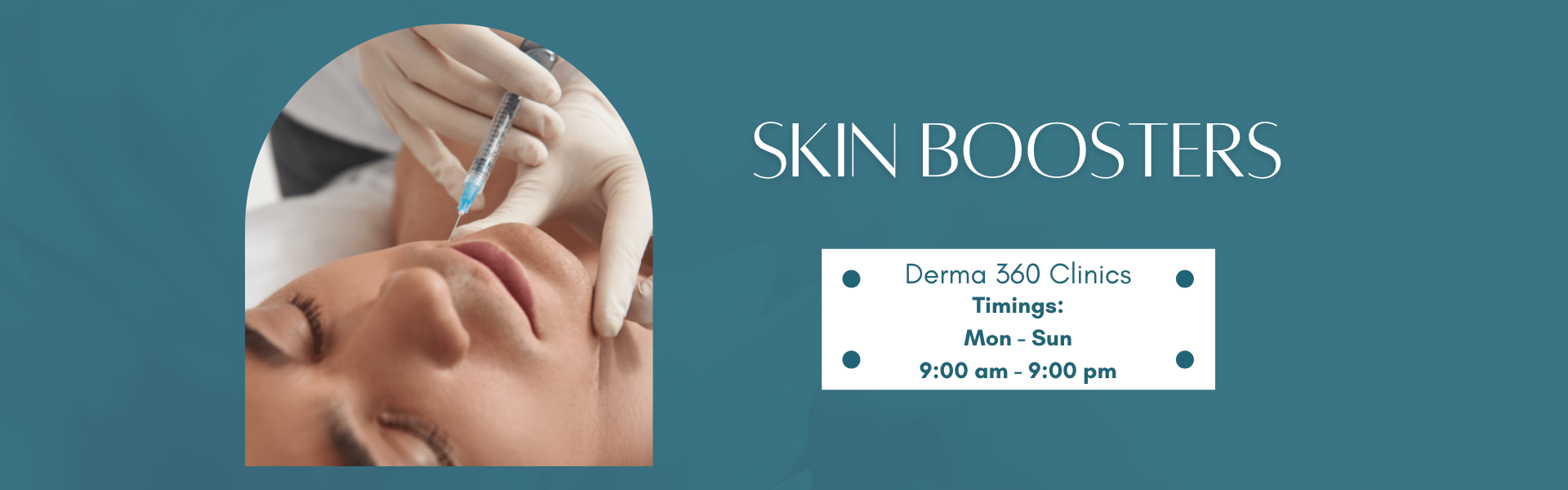

Skin Boosters
Skin boosters are essentially vitalizing dermal fillers that revitalize the skin, improving its appearance, texture and slows down the ageing process from within. Unlike other dermal fillers, skin boosters do nothing for contouring or shaping the facial structure, and they can be applied anywhere on the face, neck or hands.
TREATMENTS:
Each type of skin booster contains different primary ingredients that are suited for different skin goals. In general, all skin boosters contain hyaluronic acid (HLA) – the primary molecule in your tissue repair system – but they don’t all carry the same amount.
For example, the latest skin booster Profhilo is made up of complex hyaluronic acid (HA) molecules – a blend of high molecular weight and low molecular weight HA. This amalgamation allows easier penetration of the epidermis skin layer into the dermis layer, where the magic will take place.
In another popular skin booster, Rejuran Healer, the key ingredient is the all-encompassing salmon DNA. This is transdermally delivered into the skin dermis layer, releasing moisturizing and anti-oxidant properties that results in glowing, dewy-textured skin.
While research continues to find innovative ways to keep the skin looking young, injectable and needleless Rejuran Healer still remains a promising solution in the age-old quest towards ageless skin, thanks to its tissue-healing and anti-inflammatory properties.
Other types of skin boosters that are fairly sought-after also include:
- Profhilo
- Jalupro
- Restylane
Book an appointment
Everything you need to feel healthy and beautiful

Still Need Help? Send us a Message
Lorem ipsum dolor sit amet, consectetur adipiscing elit. Ut elit tellus, luctus nec ullamcorper mattis, pulvinar dapibus leo.
Frequently Asked Questions
According to research from 2014, PRP injections are effective in treating androgenic alopecia, which is also known as male pattern baldness.
PRP treatment is a non-surgical medical procedure where concentrated plasma rich in growth factor and nutrients separated from your own blood are injected into parts of your scalp that need hair growth. It is a safe and effective way to reverse hair loss and activate new hair growth.
PRP hair restoration produces noticeable results after just four to six weeks. However, it may be approximately 3.5 months before you see the results you were looking for. Due to the hair growth cycle, ideal results can take up to three sessions spaced one month apart to become apparent.
Most PRP therapy requires three treatments 4–6 weeks apart. Maintenance treatments are required every 4–6 months.
Injury to blood vessels or nerves, scar tissue, calcification at injection points, infection are some of the possible side effects of PRP.
Up to three PRP injections may be given within a six-month time frame, usually performed two to three weeks apart.
Stop taking any alcohol and if you must have some, restrict to one or two drinks. Increase the quantity of water to make up for the alcohol effects.
Studies have shown that the best candidates for PRP therapy in Dallas are those whose hair loss is recent since it can be difficult to revive long-dormant hair follicles. Ideally, a patient's scalp will feature areas of so-called “weak-quality” hair growth where functioning hair follicles remain.
Platelet-rich plasma injections may not be appropriate for a patient who: Has a medical condition that could worsen or spread with injections, such as an active infection, a metastatic disease, or certain skin diseases. Has certain blood and bleeding disorders.
Don't color your hair or get a perm for at least 72 hours after the PRP injections. The harsh chemicals will irritate the site of the injections and possibly cause complications. It also exacerbates scalp pain